If you're just getting started at the gym, identifying gym equipment can be overwhelming.
So to help untangle the confusion, we have created this guide to help you understand the names and purposes of various gym equipment.
From barbells and dumbbells to resistance bands and cardio machines, we'll cover the essentials to enhance your workout knowledge.
Whether you're setting up a home gym or navigating a fitness center, this guide will ensure you know exactly what each piece of equipment is used for.
In this guide, you'll learn:
First, we want to take a look at a variety of strength training equipment which come in all shapes and sizes.

First on the list of common pieces of strength training equipment you'll find at the gym is the power cage, also known as the squat rack.
This is a rack that has four posts, and it's used to perform a wide variety of barbell exercises. This includes the bench press, the squat, shoulder presses, and others.
There might also be specialized squat stands that only have two vertical posts, but there are also larger cages that have 6 posts.
Key Features:
Best Exercises:
💡 Pro Tip: Always set the safety bars just below your lowest position. This catches the weight if you fail a rep, preventing injury.
⚠️ Common Mistake: Not adjusting the J-hooks to the right height. Take 30 seconds to set them properly—your back will thank you.
Who Should Use It:

Next is the barbell, which is a straight bar that is generally loaded with weight plates on either side. Barbells are used to perform a plethora of strength training maneuvers.
Olympic barbells are the most common type, but there are a variety of other bars such as safety squat bar, trap bar, powerlifting bars, and more specialty bars as well.
Barbell Types Comparison:
| Bar Type | Weight | Best For | Difficulty |
| Olympic Barbell | 45 lbs | All compound lifts | Intermediate |
| Standard Barbell | 15-25 lbs | Home gyms, beginners | Beginner |
| EZ Curl Bar | 15-25 lbs | Arm exercises | Beginner |
| Trap Bar | 45-60 lbs | Deadlifts (back-friendly) | Beginner-friendly |
| Safety Squat Bar | 60-70 lbs | Squats (shoulder-friendly) | Advanced |
💡 Pro Tip: Start with just the empty bar to master form. An Olympic barbell weighs 45 pounds—that's already a workout for beginners.
⚠️ Common Mistake: Trying to lift too heavy too soon. Progressive overload takes weeks, not days.
Best For: Building serious strength with compound movements that engage your whole body.

Next we have weight plates. Weight plates are those large and round plates that come in many different weights ranging all the way from 2.5 up to over 45 pounds.
Weight plates are put on barbells and machines that require additional weight to perform exercises.
Types of Weight Plates:
Available Weights: 2.5, 5, 10, 25, 35, 45 pounds
💡 Pro Tip: Always load plates evenly on both sides. Even a 5-pound difference can throw off your form and cause injury.
⚠️ Common Mistake: Not using collars (clips) to secure plates. Plates can slide off during exercise, which is dangerous.
When to Use:

Dumbbells are one of the most common pieces of strength training equipment you'll find at the gym.
Dumbbells can be made out of rubber, metal, plastic, and other materials too. These feature two heads connected in the middle by a handle, and they can come in a wide variety of weights, all the way from one pound up to several hundred pounds.
Why Dumbbells Are Essential:
Dumbbell Weight Guide:
| Fitness Level | Men | Women | Starting Point |
| Complete Beginner | 5-15 lbs | 3-10 lbs | Upper body |
| Beginner | 10-25 lbs | 5-15 lbs | Most exercises |
| Intermediate | 25-50 lbs | 15-30 lbs | Compound moves |
| Advanced | 50-100+ lbs | 30-50+ lbs | Heavy lifting |
💡 Pro Tip: The dumbbell should feel challenging by rep 8-10, but you should maintain perfect form. If you're swinging or using momentum, go lighter.
⚠️ Common Mistake: Using dumbbells that are too heavy and compensating with poor form. This leads to injuries, not gains.
Best Exercises:

Kettlebells, as the name implies, look like a bell. They feature a large circular weight with a handle on top.
These are ideal for a variety of stability and conditioning exercises, as well as strength training.
Kettlebell Benefits:
Popular Kettlebell Exercises:
💡 Pro Tip: Start with 15-20 lbs for men, 10-15 lbs for women. Kettlebell exercises are harder than they look because of the offset weight distribution.
⚠️ Common Mistake: Swinging with your arms instead of your hips. Kettlebell swings are a hip hinge movement, not an arm exercise.
When to Use:

Resistance bands are elastic bands, usually made out of latex rubber. They can be used instead of kettlebells, dumbbells, and barbells.
They are great for resistance training, although more often used for warming up and rehabilitation purposes.
Types of Resistance Bands:
Resistance Levels:
💡 Pro Tip: Use bands for warm-up sets before heavy lifting. They activate muscles without fatigue and reduce injury risk by 40%.
Benefits Over Weights:
When to Use:

Next on the list is the weight bench, which is an adjustable or flat bench that is used to support your body while you perform many different exercises.
You can adjust the bench to an upright position and down to a flat position, for a variety of upper body and lower body exercises.
Bench Types:
Bench Angles & What They Target:
| Angle | Targets | Best For |
| Flat (0°) | Middle chest | Overall chest development |
| Incline (30-45°) | Upper chest, front shoulders | Upper chest growth |
| Decline (-15 to -30°) | Lower chest | Lower chest definition |
| Upright (90°) | Shoulders | Shoulder exercises |
💡 Pro Tip: Use incline bench 2-3 times more than flat bench. Most people have underdeveloped upper chest, and incline fixes this.
⚠️ Common Mistake: Setting incline too steep (over 45°). This shifts focus to shoulders instead of chest.
Best Exercises:

Generally speaking, a functional trainer is a freestanding cable machine which is also sometimes called a cable crossover machine. It's designed to recreate real-life movements, hence why it is called the functional trainer.
Because functional trainers use pulleys, you might notice the weight doesn't always feel as heavy as the raw weight.
Understanding Cable Ratios:
Why Cable Machines Are Superior for Certain Goals:
💡 Pro Tip: Cable machines are perfect for "time under tension" training. The constant resistance builds muscle definition better than free weights for isolation exercises.
Popular Cable Exercises:
When to Use:

If you want to exercise your lats and back, then the lat pulldown machine is what you need.
This is a special strength training machine designed primarily to develop your back. It trains your rear delts, traps, lats, biceps, and more.
Muscles Worked:
Grip Variations & What They Target:
| Grip Type | Width | Targets | Difficulty |
| Wide Overhand | Wider than shoulders | Lat width | Beginner |
| Close Underhand | Shoulder-width | Lat thickness, biceps | Beginner |
| Neutral Grip | Parallel handles | Middle back | Intermediate |
| Behind Neck | Wide | Lats (risky for shoulders) | Avoid |
💡 Pro Tip: Pull to your upper chest, not your neck. Leaning back slightly (10-15°) is fine—it's not "cheating," it's proper form.
⚠️ Common Mistake: Using momentum and swinging back. This takes tension off your lats. Control the weight with a 1-2 second pause at the bottom.
⚠️ Avoid This: Never pull the bar behind your neck. This position puts extreme stress on your shoulder joints and can cause injury.
Progression Path:

Next on the list of strength training equipment, we have the Smith machine. This is more or less a safety system for barbell exercises.
The barbell is attached to vertical rails, and it comes complete with safety stops and hooks at various heights.
Smith Machine Features:
Smith Machine vs Free Weight Barbell:
| Feature | Smith Machine | Free Barbell |
| Safety | Very safe | Needs spotter |
| Muscle Activation | 60-70% of free weight | 100% (includes stabilizers) |
| Best For | Beginners, isolation | Functional strength |
| Learning Curve | Easy | Requires coaching |
| Injury Risk | Low | Medium (if bad form) |
💡 Pro Tip: Smith machine is great for drop sets and training to failure safely. You can twist and lock the bar at any point if you can't complete a rep.
⚠️ Common Mistake: Relying only on Smith machine and never learning free weight exercises. The fixed path doesn't build stabilizer muscles, which you need for real-world strength.
Best Smith Machine Exercises:
When to Use:

If you want to train your legs but you don't want to have to deal with squatting and all of the trouble that comes with it, then the leg press machine is for you.
The leg press machine has you in a seated or reclined position and pushing a platform loaded with weight upwards or away from you.
Leg Press Types:
Muscles Worked:
Foot Placement Guide:
| Foot Position | Targets | Best For |
| Middle, shoulder-width | Quads, glutes evenly | Overall leg development |
| High on platform | Glutes, hamstrings more | Glute growth |
| Low on platform | Quads more | Quad development |
| Wide stance | Inner thighs, glutes | Adductors |
| Narrow stance | Outer quads | Quad sweep |
💡 Pro Tip: Don't lock your knees at the top—keep a slight bend. Locking knees under heavy load can cause serious injury.
⚠️ Common Mistake: Letting your lower back round at the bottom. This puts dangerous pressure on your spine. Only go as low as you can while keeping your back flat against the pad.
Benefits Over Squats:
Who Should Use It:

The hack squat machine is another excellent piece of equipment for building leg strength, particularly your quadriceps.
This machine positions you at an angle with your back against a pad and your shoulders under shoulder pads.
Hack Squat vs Leg Press:
| Feature | Hack Squat | Leg Press |
| Body Position | Standing, angled | Seated/reclined |
| Primary Focus | Quadriceps | Overall legs |
| Range of Motion | Deeper squat | Limited by flexibility |
| Core Engagement | More | Less |
| Difficulty | Harder | Easier |
| Best For | Quad growth | Beginners, overall strength |
💡 Pro Tip: Point your toes slightly outward (10-15°) and push through your heels. This prevents knee stress and maximizes quad activation.
⚠️ Common Mistake: Feet placement too low on the platform. This puts your knees past your toes, which increases injury risk. Place feet at least mid-platform.
When to Use:

In terms of growing a bigger and stronger chest, the chest press machine is what you want to go for. This is a machine that mimics the bench press.
However, instead of lying on a bench, you are in an upright or reclined position and pushing the weights in a forward motion.
Machine vs Barbell Bench Press:
| Feature | Chest Press Machine | Barbell Bench Press |
| Safety | Very safe | Needs spotter |
| Muscle Activation | 70-80% of free weight | 100% |
| Learning Curve | Immediate | Weeks to master |
| Stabilizers | Not required | Highly engaged |
| Best For | Isolation, beginners | Overall strength |
💡 Pro Tip: Adjust the seat height so the handles align with the middle of your chest. Wrong height = wrong muscle activation.
⚠️ Common Mistake: Flaring elbows out to 90°. Keep them at 45° angle to protect shoulders.
When to Use:

If you want to improve the strength of your hamstrings and glutes, then the leg curl machine is worth checking out.
This is a piece of weight training equipment that helps isolate both your hamstrings and your glutes. There are both lying and seated versions of the leg curl machine.
Types:
Which Type Is Better?
| Type | Hamstring Focus | Comfort | Best For |
| Lying | Upper hamstrings more | Can be uncomfortable | Hamstring size |
| Seated | Lower hamstrings more | More comfortable | Beginners |
💡 Pro Tip: Go slow on the lowering phase (3 seconds down, 1 second up). The eccentric part builds more muscle and prevents hamstring injuries.
⚠️ Common Mistake: Using too much weight and relying on momentum. Hamstrings need controlled movement for growth.
When to Use:

On the other hand, we have the leg extension machine. The leg extension machine is designed to isolate your quadriceps.
Here, you sit on a chair with your shins behind a pad. You then push the pad upwards until your legs are perfectly straight and extended, therefore working out your quadriceps.
Controversy Around Leg Extensions:
💡 Pro Tip: Point your toes slightly inward to hit the outer sweep of quads, or slightly outward for inner quads (vastus medialis).
⚠️ Common Mistake: Using too heavy weight. This exercise should be done with moderate weight and perfect form. Heavy weight = knee damage over time.
Safe Usage Guidelines:
When to Use:

If you're looking to build the strength of your biceps, then the preacher curl bench is a great one to consider.
It's a good option because it allows you to perform biceps curls without putting too much strain on your elbows or other parts of your body.
Why Preacher Curls Work:
💡 Pro Tip: Use an EZ curl bar instead of straight bar. The angled grip is much easier on wrists and elbows.
⚠️ Common Mistake: Letting elbows lift off the pad during the curl. Keep them pressed flat for maximum isolation.
When to Use:
Of course, the gym isn't just home to strength training machines and tools, but to cardiovascular equipment too.
Let's find out what some of the most commonly used pieces of cardiovascular training equipment in the gym are.

A treadmill is a piece of cardiovascular exercise equipment that you stand on. It is designed for walking, running, and jogging. For some people, it's even meant for sprinting.
Treadmill Benefits:
Treadmill Features to Look For:
Calories Burned (160 lb person):
| Activity | 30 Minutes | 60 Minutes |
| Walking (3.5 mph) | 140 cal | 280 cal |
| Jogging (5 mph) | 240 cal | 480 cal |
| Running (6 mph) | 300 cal | 600 cal |
| Running (8 mph) | 375 cal | 750 cal |
💡 Pro Tip: Walking at 10-15% incline burns as many calories as jogging, but with half the joint impact. Perfect for fat loss without knee stress.
⚠️ Common Mistake: Holding onto the handrails while walking or running. This reduces calorie burn by 20-25% and creates bad posture.
Workout Ideas:
When to Use:

Speaking of low-impact, if you are looking for a great lower body workout that involves your cardiovascular system, then the elliptical cross trainer machine is worth considering.
An elliptical machine has you working out in a gliding motion as opposed to a walking or running motion.
Why Ellipticals Are Popular:
Elliptical vs Treadmill:
| Feature | Elliptical | Treadmill |
| Joint Impact | Zero | High |
| Calories Burned | 500-750/hr | 600-1000/hr |
| Muscle Groups | Full body | Lower body focus |
| Difficulty | Easier | Harder |
| Best For | Joint protection | Running training |
💡 Pro Tip: Pedal backwards on the elliptical to target hamstrings and glutes more. Most people never do this!
⚠️ Common Mistake: Setting resistance too low and just "coasting." Increase resistance until you feel your muscles working.
Workout Variations:
When to Use:

Next on the list, we have the exercise bike. This is a stationary piece of exercise equipment. These can be upright bikes, spinning bikes, or recumbent bikes where you sit down with back support.
Types of Exercise Bikes:
| Type | Position | Intensity | Best For |
| Upright Bike | Similar to road bike | Medium-High | General cardio |
| Recumbent Bike | Reclined with back support | Low-Medium | Seniors, back pain |
| Spin Bike | Aggressive lean forward | High | HIIT, cycling enthusiasts |
| Air Bike | Upright with arm movement | Very High | CrossFit, conditioning |
Muscles Worked:
💡 Pro Tip: Adjust the seat so your knee has a slight bend (5-10°) when the pedal is at the lowest point. Wrong seat height = knee pain.
⚠️ Common Mistake: Seat too low or too high. This causes knee strain and reduces effectiveness.
Benefits:
When to Use:

A very interesting piece of cardiovascular exercise equipment is the air bike. This is a special type of stationary bike that is powered by the user alone.
The more you pedal, the more air resistance there is, and the harder it gets. Air bikes also have moving arms that let you work your upper body simultaneously.
What Makes Air Bikes Unique:
Air Bike vs Regular Bike:
💡 Pro Tip: Air bikes are BRUTAL for HIIT. Start with 10 seconds max effort, 50 seconds rest. That's harder than it sounds!
⚠️ Common Mistake: Going all-out for more than 30 seconds. Air bikes fatigue you quickly—pace yourself.
Best Workout Protocol:
When to Use:

If you want a fantastic full-body workout, but something especially great for your upper body, then the rower or rowing machine is for you.
This is a piece of cardiovascular exercise equipment that is meant to recreate the traditional movement of rowing on water.
Why Rowers Are Underrated:
Muscles Worked (In Order):
Proper Rowing Form:
💡 Pro Tip: The power comes from your legs, not your arms. The sequence is: legs, core, arms (pull). Then reverse: arms, core, legs (return).
⚠️ Common Mistake: Pulling with arms first. This exhausts your arms quickly and misses the powerful leg drive. Remember: legs push, then arms pull.
Rowing Workouts:
When to Use:

If you like climbing upwards, then the stair stepper might be the right machine for you. As the name implies, this is a piece of cardiovascular exercise equipment that mimics climbing stairs.
Why Stairmasters Are Challenging:
Stairmaster Types:
Muscles Worked:
💡 Pro Tip: Don't lean on the handles! This reduces glute activation by 30% and defeats the purpose. Use handles only for light balance.
⚠️ Common Mistake: Setting the speed too high and holding on for dear life. Start at level 4-6 and focus on proper form.
Workout Ideas:
When to Use:
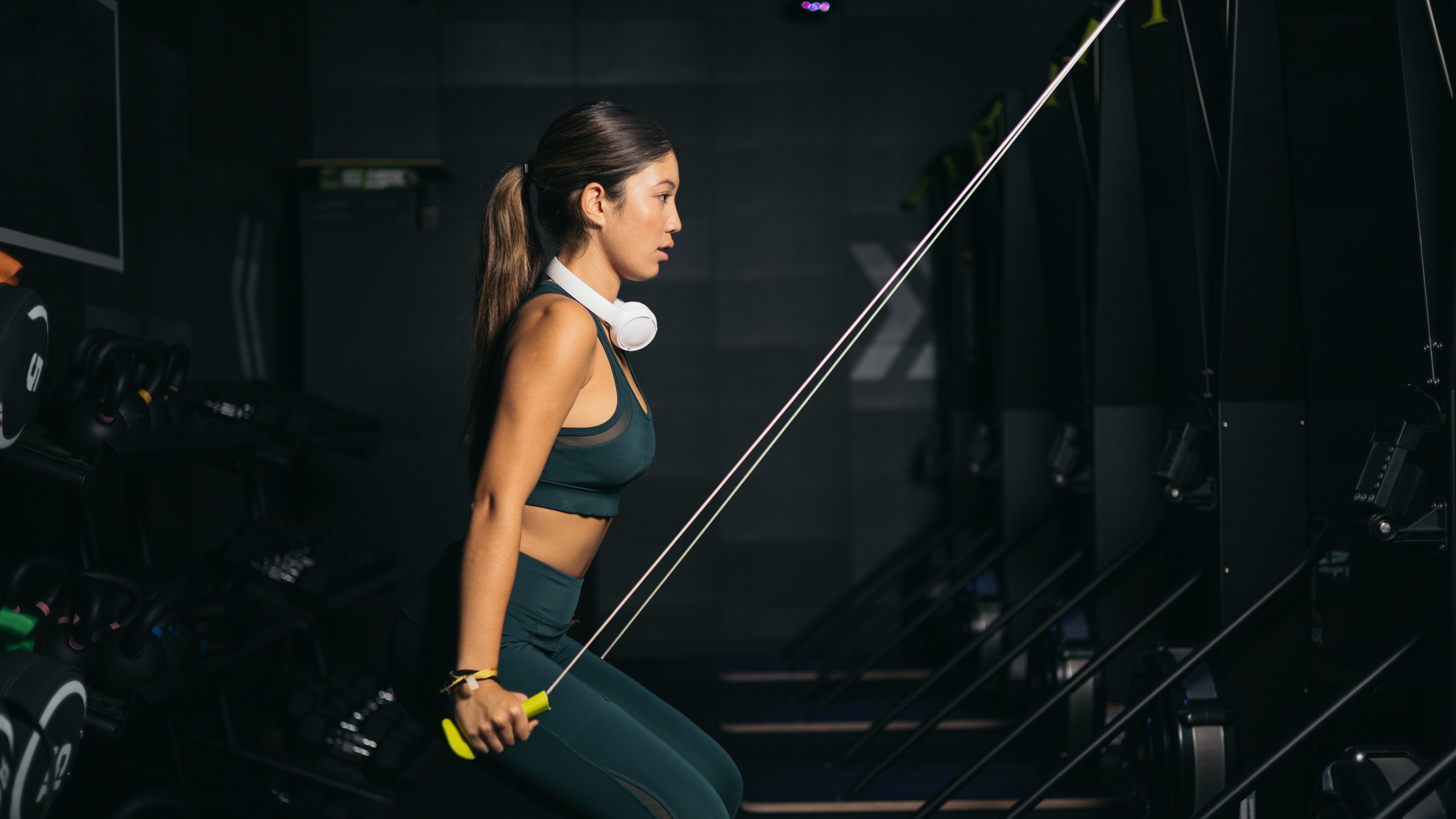
The ski erg is perhaps one of the most interesting cardiovascular exercise machines at the gym. It's very similar to the rowing machine, but it is in an upright position.
It's designed to recreate cross-country skiing. It works out primarily the core and upper body, but your legs as well.
Ski Erg Benefits:
Muscles Worked:
💡 Pro Tip: Use your legs! Squat down and explode up with each pull. This turns it into a full-body exercise and saves your arms.
⚠️ Common Mistake: Only using arms and getting exhausted in 2 minutes. Engage your core and legs for sustainable power.
When to Use:
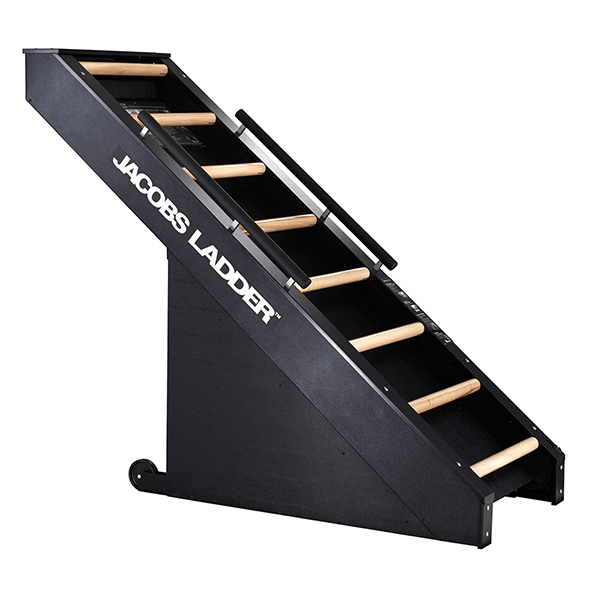
Jacob's Ladder is a unique climbing machine that looks like a never-ending ladder set at an angle.
You climb the rungs continuously, and the ladder moves beneath you. It's self-paced, meaning the faster you climb, the faster it goes.
Why Jacob's Ladder Is Effective:
💡 Pro Tip: Lean into the machine at about 45° angle. This engages your core and makes climbing more efficient.
⚠️ Common Mistake: Climbing too upright. This makes it harder and less efficient.
When to Use:

A jump rope is simply a rope or cable with handles. They are made out of rope, plastic, rubber, or other such materials.
Jump Rope Benefits:
Jump Rope Types:
| Type | Material | Best For | Price |
| Basic Rope | Cotton/nylon | Beginners | $5-15 |
| Speed Rope | Thin cable | Fast jumps, double-unders | $15-30 |
| Weighted Rope | Heavy handles/cable | Strength training | $20-40 |
| Beaded Rope | Plastic beads | Outdoor use | $10-20 |
💡 Pro Tip: Jump on a soft surface (rubber mat, wood floor) not concrete. This protects your joints and knees.
⚠️ Common Mistake: Jumping too high. Only jump 1-2 inches off the ground—just enough for the rope to pass under.
Progression Guide:
Functional training equipment focuses on movements that translate to real-life activities and sports performance.

Battle ropes are very heavy ropes that you attach to an anchored point.
You then move your arms in an up and down motion while holding the ropes, creating waves in the rope.
Battle Rope Benefits:
Rope Specifications:
Battle Rope Variations:
| Movement | Primary Muscles | Difficulty | Cardio Intensity |
| Alternating Waves | Shoulders, core | Beginner | High |
| Double Waves | Shoulders, chest | Beginner | Very High |
| Slams | Full body | Intermediate | Extreme |
| Circles | Shoulders, obliques | Intermediate | High |
| Side-to-Side | Obliques, core | Advanced | High |
💡 Pro Tip: Keep your core tight and knees slightly bent. The power comes from your core and hips, not just your arms.
⚠️ Common Mistake: Standing too close to the anchor point. This makes it harder and less effective. Stand back so there's slack in the ropes.
Sample Workout:
When to Use:

Sleds are a special piece of equipment that you can load weighted plates onto. Sleds are designed to be pushed and pulled along the floor or turf.
Sled Benefits:
Sled Exercises:
| Exercise | Muscles Worked | Best For | Difficulty |
| Push | Quads, calves, chest | Speed, power | Beginner |
| Pull (rope) | Hamstrings, back, biceps | Pulling strength | Intermediate |
| Drag (backward) | Quads, calves | Knee rehab | Beginner |
| Side Push | Glutes, adductors | Lateral strength | Advanced |
💡 Pro Tip: Sleds are perfect for active recovery days. Light weight sled pushes flush lactic acid from muscles without creating soreness.
⚠️ Common Mistake: Loading too much weight initially. Start with 1 plate and focus on speed and form.
Sled Training Protocols:
When to Use:

A medicine ball is a large type of weighted ball. This can be made out of various materials. They might be soft or hard, and they come in weights ranging from 2 to 30 pounds.
Medicine Ball Benefits:
Medicine Ball Weight Guide:
| User | Upper Body | Core Work | Full Body |
| Beginner Women | 4-6 lbs | 6-8 lbs | 8-10 lbs |
| Beginner Men | 6-10 lbs | 10-12 lbs | 12-15 lbs |
| Intermediate Women | 8-12 lbs | 10-15 lbs | 12-18 lbs |
| Intermediate Men | 12-16 lbs | 15-20 lbs | 18-25 lbs |
| Advanced | 15-25+ lbs | 20-30+ lbs | 25-40+ lbs |
Best Medicine Ball Exercises:
💡 Pro Tip: For wall balls, aim for a target 9-10 feet high. This forces proper depth in your squat.
⚠️ Common Mistake: Using a slam ball for wall balls or a medicine ball for slams. Slam balls don't bounce (for slams), medicine balls do (for wall balls).
TRX suspension trainers are straps with handles that anchor to a door, ceiling, power rack, or tree branch.
These allow you to use your body weight for resistance while performing hundreds of different exercises.
TRX Benefits:
How Difficulty Adjustment Works:
💡 Pro Tip: The more unstable you make yourself, the harder the exercise. Single-leg TRX exercises are incredibly challenging.
⚠️ Common Mistake: Not keeping straps tight. Slack in the straps reduces effectiveness and can cause you to fall.
Best TRX Exercises:
When to Use:

Plyometric boxes are special types of boxes used to perform many different exercises such as box jumps, step-ups, elevated push-ups, and more.
Plyo Box Heights:
Box Types:
| Type | Material | Pros | Cons |
| Wood | Plywood | Durable, stable | Can hurt shins |
| Foam | Dense foam | Soft, safe | Less stable |
| Metal | Steel | Very stable, adjustable | Expensive, can rust |
| 3-in-1 | Wood | Multiple heights | Heavy |
💡 Pro Tip: Step down from the box, don't jump down. Jumping down increases injury risk and isn't part of the training stimulus.
⚠️ Common Mistake: Ego-lifting with box height. It's not about how high you can jump—it's about explosive power and safe landing.
Best Plyo Box Exercises:

While not exactly "training" equipment, the foam roller is essential for recovery. This is a cylindrical piece of dense foam used for self-massage and myofascial release.
Foam Roller Benefits:
Foam Roller Types:
| Type | Density | Best For | Price |
| Smooth, soft | Low | Beginners, sensitive muscles | $15-25 |
| Smooth, firm | Medium | General use | $20-30 |
| Textured | Medium | Deeper massage | $25-40 |
| Vibrating | N/A | Advanced recovery | $100-200 |
💡 Pro Tip: Roll for 30-60 seconds per muscle group BEFORE workouts to increase performance and reduce injury risk by 20%.
⚠️ Common Mistake: Rolling too fast. Move slowly (1 inch per second) and pause on tender spots for 20-30 seconds.
Best Areas to Foam Roll:
When to Foam Roll:
Now that you know all the equipment names, here's how to choose what to use based on your goals.
Essential Equipment:
Focus on: Compound movements (squats, deadlifts, bench press, rows, overhead press)
Training Split: 4-5 days per week, focusing on progressive overload
Essential Equipment:
Focus on: High-calorie burn cardio + strength training to preserve muscle
Training Split: 5-6 days per week (3 days cardio, 3 days strength)
Essential Equipment:
Focus on: Progressive cardio intensity, interval training
Training Split: 4-5 days per week, mix of steady-state and HIIT
Essential Equipment:
Focus on: Movement patterns, explosive power, stability
Training Split: 3-4 days per week, full-body workouts
Essential Equipment (Under $500):
Total: ~$350-450
These 6 items let you do 100+ exercises!
The Problem: Ego lifting leads to injuries, not gains.
The Fix: Use a weight where you can complete 8-12 reps with perfect form. The last 2 reps should be challenging but controlled.
The Problem: Cold muscles tear easily. Jumping straight into heavy lifting increases injury risk by 40%.
The Fix:
The Problem: Wrong machine adjustments lead to injuries and poor muscle activation.
The Fix: Take 1-2 minutes to adjust seat height, pad position, and range of motion stops on every machine.
The Problem: Reduces calorie burn by 20-30% and creates poor posture.
The Fix: Use handles only for light balance. If you need to hold on, reduce the speed or incline.
The Problem: Bad form = eventual injury. Perfect form = sustainable progress.
The Fix: Video yourself, hire a trainer for 2-3 sessions, or ask gym staff for form checks.
The Problem: Your body adapts in 6-8 weeks. Progress stops.
The Fix: Change exercises, rep ranges, or workout splits every 6-8 weeks.
The Problem: Partial reps = partial results. You miss 40% of muscle activation.
The Fix: Control the weight through the entire movement. Slow down if needed.
Before getting fancy, master these five movements:
These five patterns cover your entire body.
Your muscles only grow if you give them a reason to adapt.
How to progress:
Muscles don't grow in the gym—they grow during recovery.
Optimal Rest:
Compound exercises (squats, deadlifts, bench press) should make up 70-80% of your workout. Isolation exercises (bicep curls, leg extensions) are the final 20-30%.
Why? Compound movements:
Working out 3-4 days per week for 6 months beats working out 7 days per week for 3 weeks then quitting.
The Rule: Something is always better than nothing. Even a 20-minute workout counts.
Knowing equipment names is one thing. Using them respectfully is another.

You now know the names and uses of 50+ major pieces of gym equipment. From treadmills and ellipticals to power racks and battle ropes, you have the knowledge to walk into any gym with confidence.
Remember these key points:
The gym is no longer an intimidating place full of mysterious machines. It's your playground for getting stronger, healthier, and more confident. Every piece of equipment is a tool to help you reach your fitness goals.
Now get out there and start training! You've got this.
Q: What is the most important gym equipment for beginners? A: For beginners, start with these essentials: a treadmill for cardio, leg press machine, chest press machine, lat pulldown, and dumbbells (10-25 lbs). These are safe, easy to learn, and work all major muscle groups. Avoid free-weight barbells until you've built foundational strength and learned proper form from a trainer.
Q: What's the difference between a hack squat and a leg press? A: Both work your legs, but the positioning is different. Leg press has you seated/reclined, pushing weight away horizontally or at 45 degrees, working overall leg muscles evenly. Hack squat has you standing at an angle with shoulders under pads, focusing more intensely on quadriceps. Hack squats are harder and more quad-focused.
Q: Are gym machines better than free weights? A: Neither is "better"—they serve different purposes. Machines are safer for beginners, provide stability, isolate specific muscles, and don't require spotters. Free weights engage stabilizer muscles, allow natural movement patterns, and build functional strength. The best approach uses both: machines for isolation work and free weights for compound movements.
Q: What cardio equipment burns the most calories? A: Rowing machines typically burn the most calories (600-800 per hour) because they work 85% of your body's muscles. Close seconds are battle ropes (600-700/hr), running on treadmill (600-1000/hr), and air bikes (600-900/hr). However, the "best" cardio equipment is the one you'll actually use consistently.
Q: How do I know which weight to start with on machines? A: Start with a weight where you can complete 10-12 repetitions with perfect form, with the last 2-3 reps feeling challenging but controlled. If you can easily do 15+ reps, increase the weight by 5-10 lbs. If you can't do 8 reps with proper form, decrease the weight. Always prioritize form over weight.
Q: Should I do cardio or weights first at the gym? A: Do whatever aligns with your primary goal first when you have the most energy. For building muscle, lift weights first. For improving cardiovascular fitness, do cardio first. Most trainers recommend: 5-10 minutes light cardio warm-up → strength training → 20-30 minutes intense cardio if time allows.
Q: What is a Smith machine used for? A: A Smith machine is a barbell attached to vertical rails with safety stops at various heights. It's used for squats, bench press, shoulder press, and rows. The fixed path makes it safer for lifting alone without a spotter and easier for beginners to learn proper movement patterns. However, it doesn't build stabilizer muscles like free weights do.
Q: What's the difference between an elliptical and a treadmill? A: Treadmills simulate walking/running with impact on your joints (high-impact). Ellipticals provide a gliding motion with zero impact (low-impact), making them easier on knees, hips, and ankles. Ellipticals also work your arms with moving handles. Treadmills burn slightly more calories (600-1000/hr vs 500-750/hr) but ellipticals are better for people with joint issues.
Q: Can I build muscle using only machines? A: Yes, you can build significant muscle using only machines, especially as a beginner. Machines safely isolate muscles and allow progressive overload. However, for maximum functional strength and muscle development, incorporate free weights (dumbbells, barbells) for at least 30% of your training once you've mastered proper form.
Q: How long should I use each piece of cardio equipment? A: For steady-state cardio, aim for 20-45 minutes per machine. For HIIT (high-intensity interval training), 10-20 minutes is sufficient. Beginners should start with 10-15 minutes and gradually increase duration. If you're doing multiple cardio machines in one session, spend 10-15 minutes on each for variety.
Fill the form below to request for 1-on-1 free demo
.jpeg)
.jpg)

.webp)