

Just a few decades ago, gym memberships were mostly limited to serious lifters, athletes, and fitness purists whose routines revolved around training. Today, however, awareness of health and wellbeing has made fitness a priority for people from all walks of life. There’s no single “typical gym member” anymore because fitness habits now span ages, lifestyles, and goals around the world.
These changes are backed by data, and as we move into 2026, understanding gym usage trends, attendance behavior, and industry growth forecasts will be crucial for gym owners and fitness professionals who want to stay ahead.
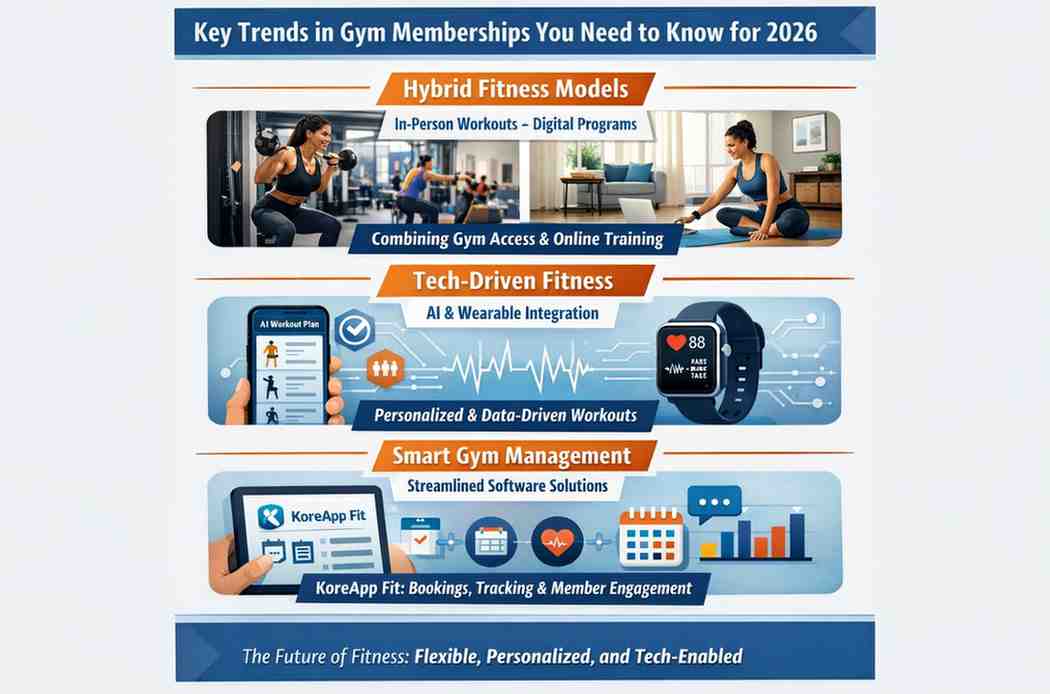
The fitness landscape is evolving, and several key trends will define gym membership behavior in 2026. One of the biggest shifts we’re seeing is the move toward hybrid gym models that combine in‑person access with digital workouts and app‑based programs. This flexibility meets the needs of both traditional gym goers and people who prefer training from home.
Technology continues to influence how people engage with fitness. From AI‑driven workout suggestions to wearable device integration, personalized fitness experiences are no longer a luxury—they’re expected. Gyms that adopt these technologies will be better positioned to attract and retain members.
For gym owners to truly leverage these trends, tools like gym management software that sync member activity, track progress, and automate engagement can be a game-changer. A good example is KoreApp Fit, which helps streamline bookings, classes, and member communication while providing data that supports personalized fitness plans.
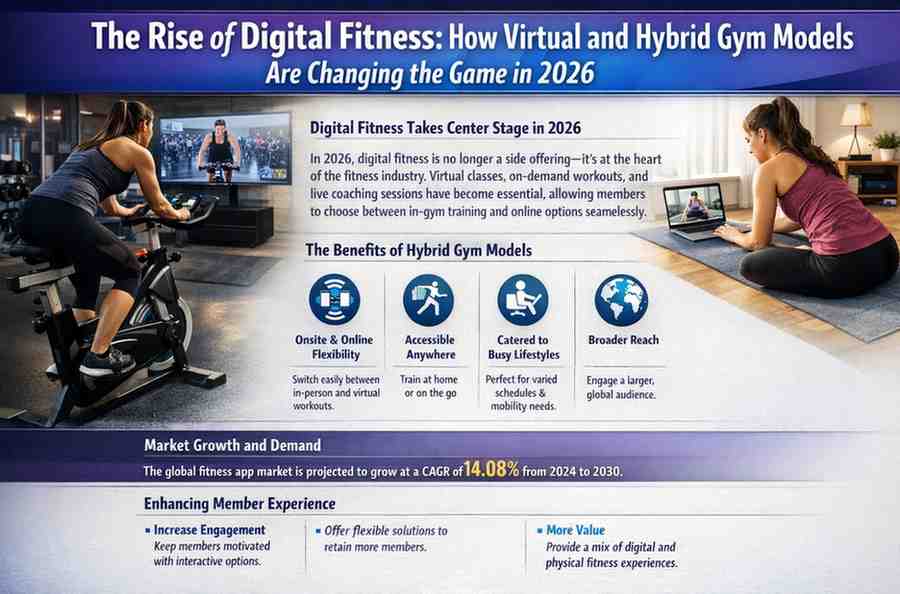
In 2026, digital fitness is no longer a side offering—it’s central to how gyms operate. Virtual classes, on‑demand workouts, and live coaching sessions have expanded options for members and widened the potential audience for gyms. Hybrid models let members switch seamlessly between onsite training and online sessions.
This trend appeals to people with varied schedules or mobility needs, and it reflects broader shifts in how consumers use fitness services. According to industry data, the global fitness app market is expected to grow at a compound annual growth rate of 14.08% from 2024 to 2030, indicating strong demand for digital fitness solutions. (Source)
By integrating virtual offerings with physical gym access, facilities can increase engagement, reduce churn, and offer more value to members who want flexibility.

Gym membership growth around the world is uneven but accelerating. Western countries like Sweden and the USA have some of the highest membership rates, with over 20% of the population regularly enrolled in fitness clubs (Source).
Emerging markets are catching up fast. For example, India currently has a relatively low fitness club penetration rate, but its large and increasingly health‑conscious population represents a major growth opportunity. If membership penetration in India rises even modestly, the number of active gym members could jump significantly, making it one of the fastest‑growing markets globally.
On the revenue side, the global fitness industry is projected to grow into the hundreds of billions of dollars over the next decade, demonstrating that demand for gym access is expanding both in developed and developing economies.

Artificial Intelligence (AI) and technology are set to revolutionize the gym experience in 2026. From personalized fitness plans to smart gym equipment, these innovations are making workouts more efficient and tailored to each individual’s goals. AI-powered apps will track a member’s progress, offer workout suggestions based on their performance, and even suggest recovery techniques, all while adjusting in real-time (Source).
Wearable devices like smartwatches and fitness trackers will integrate with gym equipment to provide accurate data on heart rate, calories burned, and even stress levels. This data will not only improve workouts but also help gym members track their overall health in a more holistic way. As more gyms adopt this technology, members will have more reasons to stay engaged, improving retention rates and making fitness experiences more effective and personalized.
To stay competitive, gym owners can implement gym management software that integrates with AI and wearables, providing both members and gym operators with better data insights and personalized workout recommendations.
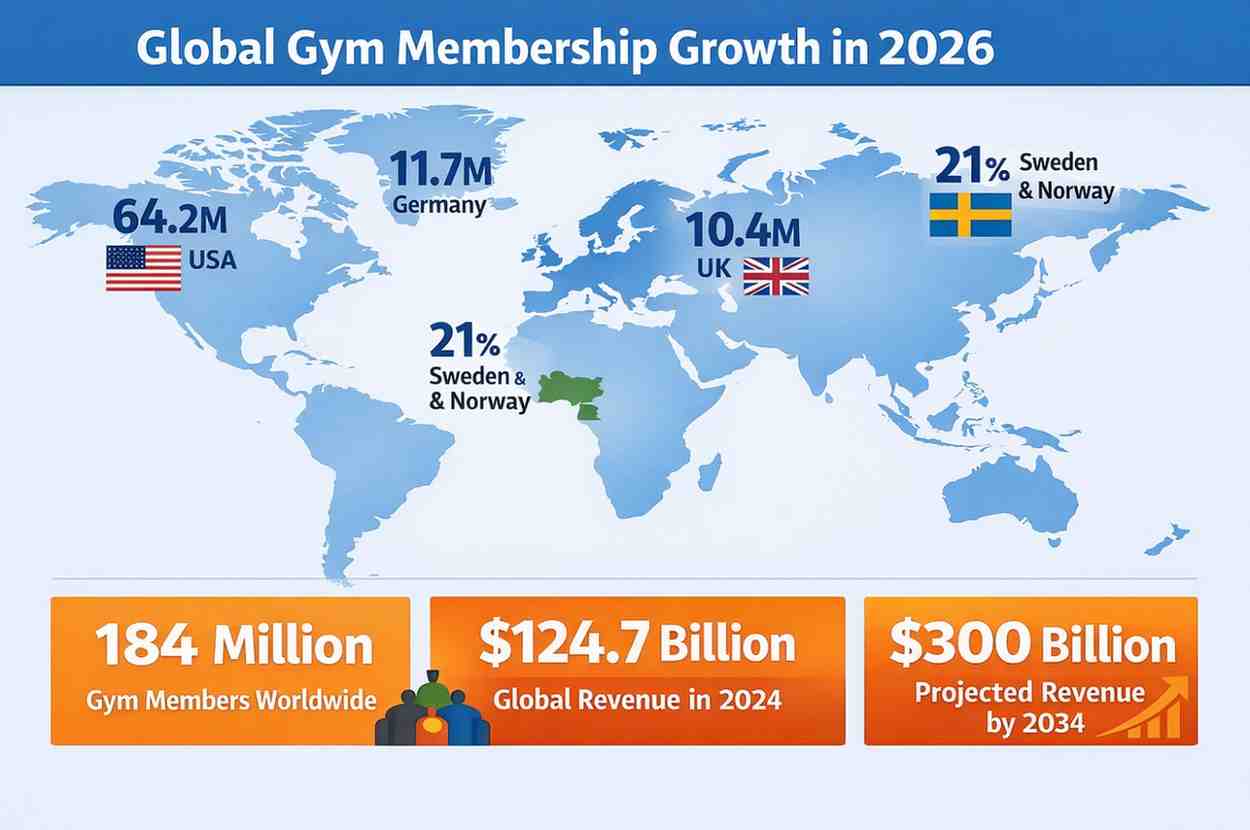
The fitness industry’s global expansion is not just driven by Western markets; emerging markets are becoming increasingly important. Countries like India, China, and Brazil are expected to see significant growth in gym memberships in 2026 due to urbanization, rising middle-class incomes, and growing health consciousness.
In India, while gym membership penetration is still relatively low, it presents one of the largest untapped markets. With the right strategies and accessible membership models, gyms can tap into a growing population of health-conscious individuals. By achieving even a modest penetration rate, India could see the number of gym members increase dramatically, potentially adding millions of new members to the global fitness industry.
Top countries by gym industry revenue in 2026 will likely include the USA, Germany, and China, where the fitness sector is expected to grow exponentially over the next decade (Source).
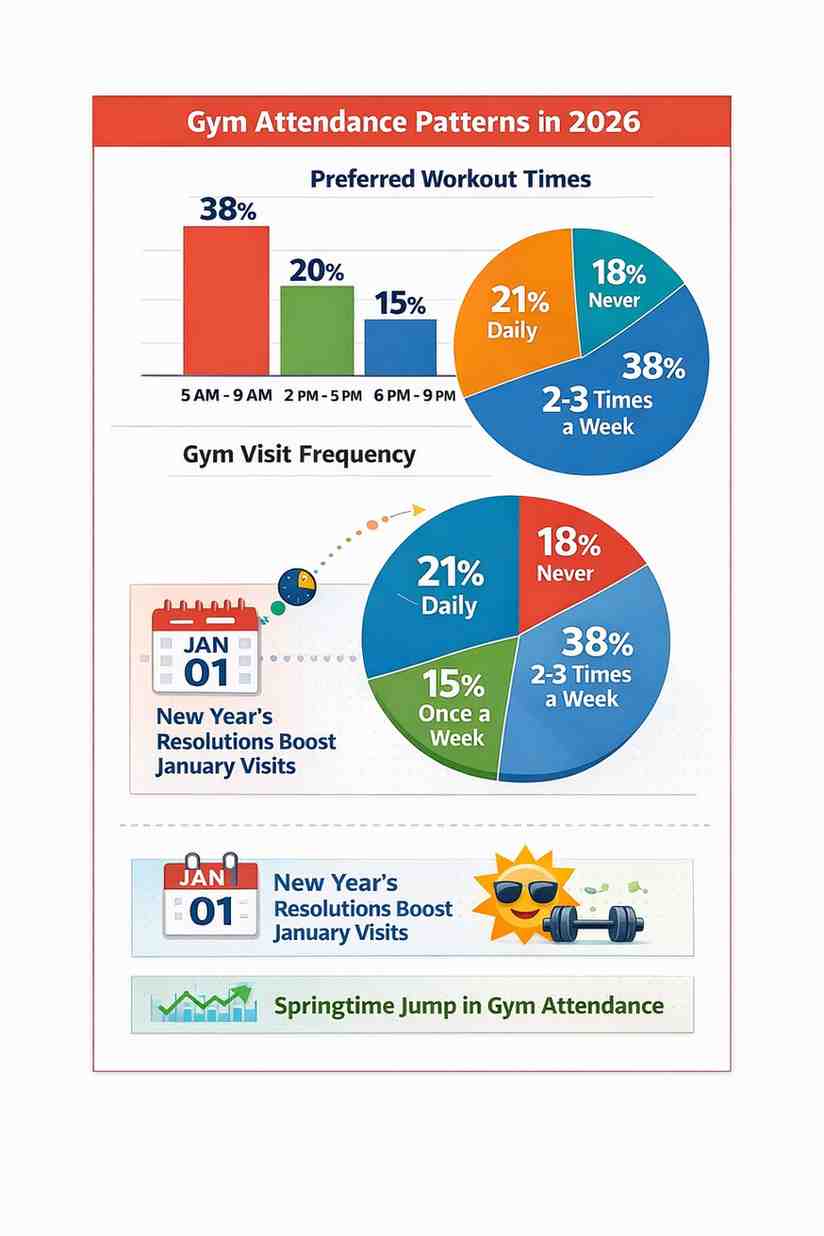
Gym attendance patterns are expected to change in 2026, with members attending gyms based on personalized schedules and seasonal goals. According to recent surveys, a significant percentage of gym members in the U.S. prefer early morning gym sessions (5 am–9 am), making this the peak time for attendance. However, gyms are becoming more accommodating for non-traditional hours, as flexible gym memberships allow people to work out when it suits them best (Source).
In addition to time-based trends, gym usage is expected to fluctuate seasonally. As New Year’s resolutions boost gym attendance in January, there’s also a marked increase in activity during the spring as people prepare for summer. Offering flexible membership options such as month-to-month or seasonal passes can be a great way for gym owners to take advantage of these seasonal shifts.
As the gym industry continues to grow, so do the challenges that gym owners face. Membership retention, increased competition, and rising operational costs are just a few of the issues gym owners must address in 2026. One of the most significant hurdles will be keeping members engaged and ensuring they get the value they expect from their memberships.
Gym management software can help gym owners overcome many of these challenges. By offering features like automated billing, member communication, and class scheduling, gyms can improve their operational efficiency and focus on delivering a superior member experience. Additionally, technology-driven solutions like AI-powered workout plans and personalized fitness coaching can keep members coming back.
Moreover, embracing flexible membership models and offering diverse fitness services—from group classes to wellness programs—can help gyms stay ahead of the curve and meet the evolving needs of today’s health-conscious consumers.

The economic contributions of the gym industry extend far beyond the revenue generated by memberships. In 2026, gyms are expected to play a significant role in both local and global economies. The fitness sector is projected to generate over $124.7 billion globally in revenue by 2024, with expectations to surpass $300 billion by 2034 (Source).
In countries like Australia, the health and fitness sector has contributed substantially to GDP, with the direct GDP contribution estimated at AUS$1.52 billion (US$1.1 billion), and indirect contributions reaching over $2.49 billion (US$1.8 billion) from its supply chain. The fitness industry not only boosts the economy through membership revenue but also through job creation and health benefits that reduce the strain on healthcare systems. With more than 184 million gym members globally, the positive economic impact of the fitness industry will only continue to grow (Source).
As gym memberships and fitness trends evolve, so too do the amenities and services gyms offer. In 2026, we expect gyms to continue providing innovative services that cater to the growing demand for holistic wellness. This includes the integration of recovery facilities such as saunas, ice baths, and massage therapy, as well as more emphasis on mental wellness offerings like meditation classes and stress relief workshops.
Gyms are also expected to enhance the personalized member experience with the use of gym management software. This software allows gyms to track member progress, automate member communications, and offer customized fitness programs based on individual goals. Incorporating smart technologies like wearable devices and interactive equipment will also allow gyms to provide a more engaging and effective workout experience (Source).
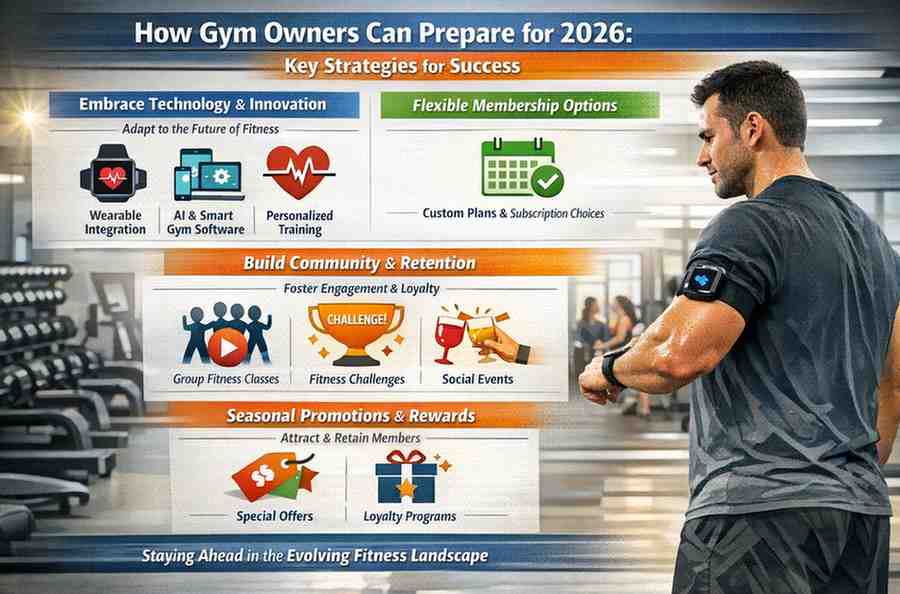
The future of gyms in 2026 will be shaped by adaptability and foresight. Gym owners will need to embrace technology, offer flexible membership options, and focus on personalized services to stay competitive in the ever-evolving fitness landscape. Adopting gym management software that integrates with wearables and AI-powered tools will be essential for providing members with a seamless experience and for optimizing gym operations.
Gym owners should also prioritize community building and member retention by fostering a sense of belonging. Group fitness classes, fitness challenges, and social events can help engage members, build loyalty, and reduce churn. In addition, creating seasonal promotions and offering loyalty rewards will help attract new members while keeping current ones engaged.
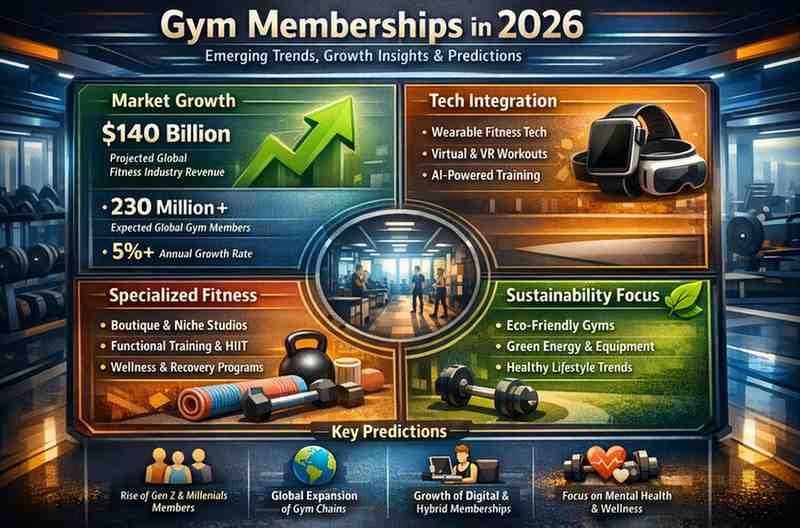
As we approach 2026, the gym and fitness industry is poised for continued growth and transformation. Hybrid membership models, advanced fitness technology, and personalized member experiences will dominate the fitness landscape, creating exciting opportunities for gym owners and fitness professionals. By adapting to these trends and utilizing gym management software to streamline operations and enhance member engagement, gyms can ensure they stay ahead of the competition.
The key to success in 2026 will be understanding the evolving demands of fitness enthusiasts and providing them with the tools, services, and experiences they crave. Whether it’s through integrating digital fitness options, improving gym facilities, or leveraging technology for personalized services, the gyms of the future will be dynamic, engaging, and focused on overall wellness.
Fill the form below to request for 1-on-1 free demo

.jpg)

.webp)