

whatsapp.png
HIIT Workout for Home: Burn Fat in 20 Minutes (No Equipment)
Kore App Team
23-01-2026

HIIT Workout for Home: Burn Fat in 20 Minutes (No Equipment)

If you’re looking for a HIIT workout for home that actually fits your schedule, you’re in the right place. HIIT (High-Intensity Interval Training) combines short bursts of effort with quick recovery breaks, so you can get a solid workout in 10 to 25 minutes without stepping out.

This style of training is popular because it works for busy people. You don’t need machines, heavy dumbbells, or a big room. With the right structure, home HIIT can help you improve stamina, feel lighter, and build strength in your legs, core, and upper body. The best part is you can scale it up or down based on your fitness level.

In this blog, you’ll get beginner-to-advanced routines, low-impact options, and a simple plan you can repeat every week.

20-Min HIIT Workout for Home (No Equipment)

  • Timer: 40 sec work / 20 sec rest
  • Structure: 10 exercises = 10 minutes per round
  • Rounds: 2 rounds = 20 minutes total
  • Best for: Fat burn, stamina, full-body conditioning
  • Low-impact option: Swap jumps with step-based moves (listed below)

What Is HIIT and Why It Works at Home

A HIIT workout is a training method where you alternate between:

  • Work intervals (high effort for a short time)
  • Rest intervals (short recovery)

Example: 30 seconds of squats, 30 seconds rest, then move to the next exercise.

Why HIIT works so well at home

  • Time-efficient: You can finish a full session faster than traditional workouts.
  • No equipment required: Bodyweight moves are enough for cardio and strength.
  • Full-body training: You work legs, glutes, core, and upper body in one routine.
  • Flexible intensity: You can do low-impact HIIT or high-intensity HIIT depending on your goals.

Who can do HIIT at home?

Most people can start HIIT with modifications. If you’re a beginner, you simply use:

  • Longer rest time
  • Low-impact moves
  • Fewer rounds

If you have knee pain, back pain, heart conditions, or are recovering from an injury, it’s safer to choose low-impact options and get medical guidance first.

Benefits of a HIIT Workout for Home (Real, Practical)

People choose a HIIT workout for home because it’s short, effective, and easy to stay consistent with. Here are the benefits most people notice when they do HIIT 3 to 4 times per week.

1) Supports fat loss and improves fitness

HIIT keeps your heart rate up and uses large muscle groups. When paired with sensible eating and regular activity, it can support fat loss and body composition goals.

2) Builds stamina and endurance

You’ll notice everyday tasks feel easier: climbing stairs, walking longer, and recovering faster after physical activity.

3) Strengthens legs, core, and glutes

Moves like squats, lunges, planks, and mountain climbers develop strength and stability, especially around the hips and midsection.

4) Works even if you have a tight schedule

A focused 12 to 15 minute session is easier to commit to than a long workout. That’s why HIIT helps many people stay consistent.

5) Can be low-impact and joint-friendly

You don’t need jumping to make HIIT effective. Low-impact variations can still feel intense while being kinder on knees and ankles.
 

Warm-Up Before HIIT (3 to 6 Minutes)

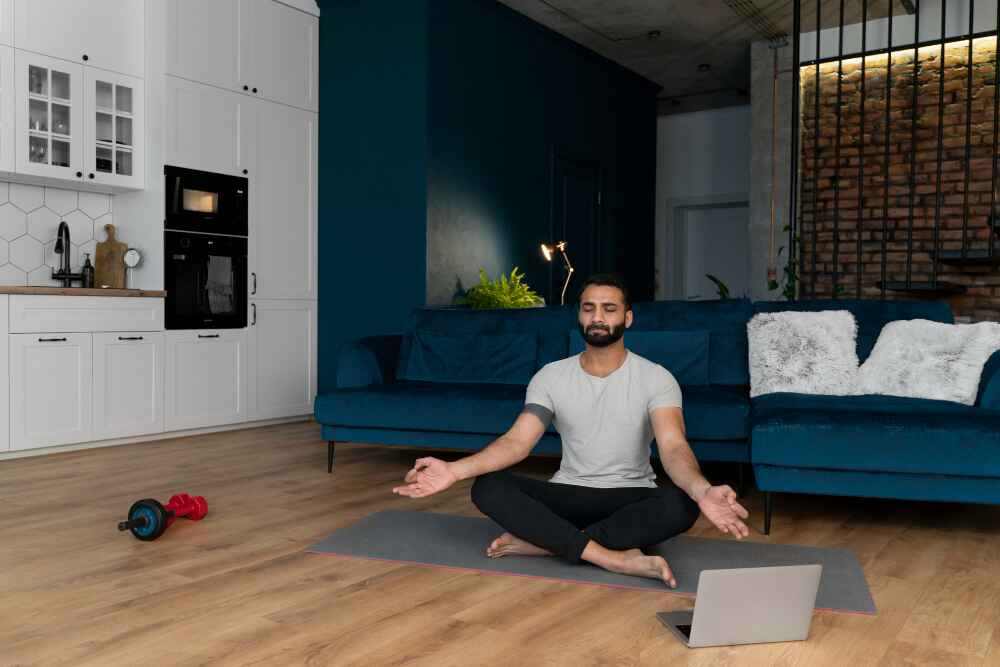
Before any HIIT workout for home, spend a few minutes warming up. It improves performance and reduces injury risk, especially for knees, ankles, and lower back.

Quick Warm-Up (Do 1 round)

  1. March in place with arm swings – 45 seconds
  2. Shoulder rolls + arm circles – 30 seconds
  3. Hip circles – 30 seconds
  4. Bodyweight squats (slow and controlled) – 45 seconds
  5. Step jacks (low-impact jumping jacks) – 45 seconds
  6. Alternating reverse step-backs (gentle) – 45 seconds

If you’re very stiff, repeat the warm-up once more.

Best HIIT Timer Formats for Home (Pick One)

A good HIIT workout for home is all about the right work-to-rest ratio. Choose one format based on your level and stick to it for 2 to 3 weeks.

1. Beginner Format

20 seconds work / 40 seconds rest

Total time: 10 to 15 minutes

Best for: beginners, low stamina, returning after a break

2. Intermediate Format

30 seconds work / 30 seconds rest

Total time: 15 to 20 minutes

Best for: regular exercisers

3. Advanced Format

40 seconds work / 20 seconds rest

Total time: 20 to 25 minutes

Best for: people who already train consistently

Simple rule: If your form breaks, increase rest or switch to low-impact options.

Section 6: HIIT Workout for Home (Beginner 12-Minute, No Equipment)

This routine is designed to help you start safely while still getting a real HIIT feel.

Format: 30 seconds work / 30 seconds rest
Rounds: 2 rounds
Total time: 12 minutes (plus warm-up and cool-down)

Exercises (6 Moves)

  1. Step Jacks
    Low-impact cardio. Step side-to-side while moving arms overhead.
  2. Squat to Chair Tap
    Squat down and lightly tap a chair or sofa edge, then stand.
    Keep your chest up and knees in line with toes.
  3. Incline Push-Ups (Wall or Sofa)
    Hands on wall/sofa, body straight, controlled push-up motion.
  4. Marching High Knees
    Drive knees up one at a time with a strong arm swing.
    Keep core tight and posture tall.
  5. Glute Bridges
    Lie on your back, knees bent, lift hips up and squeeze glutes.
  6. Plank Hold (Knees Down if Needed)
    Hold plank with a neutral back. If it’s too hard, drop knees.

How to do it

  • Complete all 6 exercises once (that’s Round 1)
  • Rest 60 seconds
  • Repeat all 6 exercises again (Round 2)

Quick Cool-Down (2 Minutes)

  • Walk slowly in place – 45 seconds
  • Quad stretch – 30 seconds each side
  • Shoulder and chest stretch – 15 seconds


HIIT Workout for Home (Burn Fat in 20 Minutes)

This is the main HIIT workout for home you can repeat 3 to 4 times a week. It’s designed to keep your heart rate up while still working your legs, core, and upper body.

Format: 40 seconds work / 20 seconds rest
Rounds: 2 rounds
Total HIIT time: 20 minutes (10 minutes per round)

10-Minute Round (Repeat Twice)

  1. Squats
    Sit back like you’re using a chair, keep chest up, knees in line with toes.
  2. Mountain Climbers
    Hands under shoulders, drive knees forward. Keep hips stable.
  3. Reverse Lunges
    Step back, drop gently, push through front heel to stand.
  4. Push-Ups (floor or incline)
    Keep your body in one line. Use sofa incline if needed.
  5. Plank Shoulder Taps
    Tap opposite shoulder without rocking hips side-to-side.
  6. High Knees (or Fast March)
    Lift knees and move arms strongly for cardio intensity.
  7. Glute Bridges
    Lift hips and squeeze glutes. Slow and controlled.
  8. Skaters (or Side Steps)
    Step side-to-side with control. Add speed if comfortable.
  9. Bicycle Crunches (or Dead Bug)
    Keep core tight, move with control, avoid pulling the neck.
  10. Burpee (No Push-Up) (or Walk-back Burpee)
    Great full-body finisher. Step back instead of jumping if needed.

After Round 1, take 60 to 90 seconds rest, sip water, then start Round 2.


Cool-Down After Your HIIT Workout (3 to 4 Minutes)

Do this after every HIIT session to bring your heart rate down and reduce next-day stiffness.

  • Slow walk in place – 45 seconds
  • Quad stretch (standing) – 30 seconds each side
  • Hamstring stretch (standing or seated) – 30 seconds each side
  • Calf stretch (against wall) – 30 seconds each side
  • Chest opener stretch (hands behind back) – 30 seconds
  • Child’s pose or gentle back stretch – 30 to 45 seconds

Breathe slowly during stretches and avoid bouncing.

Low-Impact Options (So Anyone Can Do This at Home)

A HIIT workout for home doesn’t have to include jumping to be effective. If you have knee sensitivity, are overweight, or are starting after a long break, use these swaps.

Easy Swaps

  • High knees → Fast march
  • Skaters → Side steps
  • Mountain climbers → Slow climbers
  • Burpees → Walk-back burpees
  • Jumping moves → Step-based moves
  • Deep lunges → Step-back taps

You’ll still get the HIIT effect if you keep your effort high during the work interval.

How Often to Do HIIT at Home (Simple Weekly Plan)

Most people get the best results with 3 to 4 HIIT sessions per week, with lighter movement in between.

Beginner Weekly Plan

  • 3 days HIIT
  • 2 days walking or light activity
  • 2 rest days (or gentle stretching)

Intermediate Weekly Plan

  • 3 to 4 days HIIT
  • 1 to 2 days walking or mobility
  • 1 rest day

Example Week You Can Copy

  • Monday: 12-min Beginner HIIT
  • Tuesday: Walk 25–40 min
  • Wednesday: 20-min Fat-Burn HIIT
  • Thursday: Mobility or stretching 10–15 min
  • Friday: 20-min Fat-Burn HIIT (or Beginner HIIT if tired)
  • Saturday: Walk or light activity
  • Sunday: Rest

Consistency matters more than intensity. If you can repeat this for 4 weeks, you’ll feel the difference.

Nutrition and Recovery Tips for Home HIIT

You don’t need a strict diet to benefit from HIIT, but small habits make a big difference.

Before your HIIT workout (30 to 60 minutes before)

If you’re hungry: have something light like fruit, curd, or a small sandwich

  • Drink water so you start hydrated
  • Avoid heavy, oily meals right before training

After your HIIT workout (within 60 to 90 minutes)

  • Aim for a balanced meal with protein + carbs + fibre
  • Easy examples: eggs with toast, dal-rice, paneer with roti, chicken with rice, or a protein smoothie with fruit
  • If your goal is fat loss, keep portions sensible and stay consistent

Recovery that actually helps

  • Sleep well, because recovery improves results
  • Keep at least 1 full rest day every week if you’re doing HIIT 3–4 times
  • Add light walking or stretching on non-HIIT days

How to Progress Your Home HIIT (Without Overtraining)

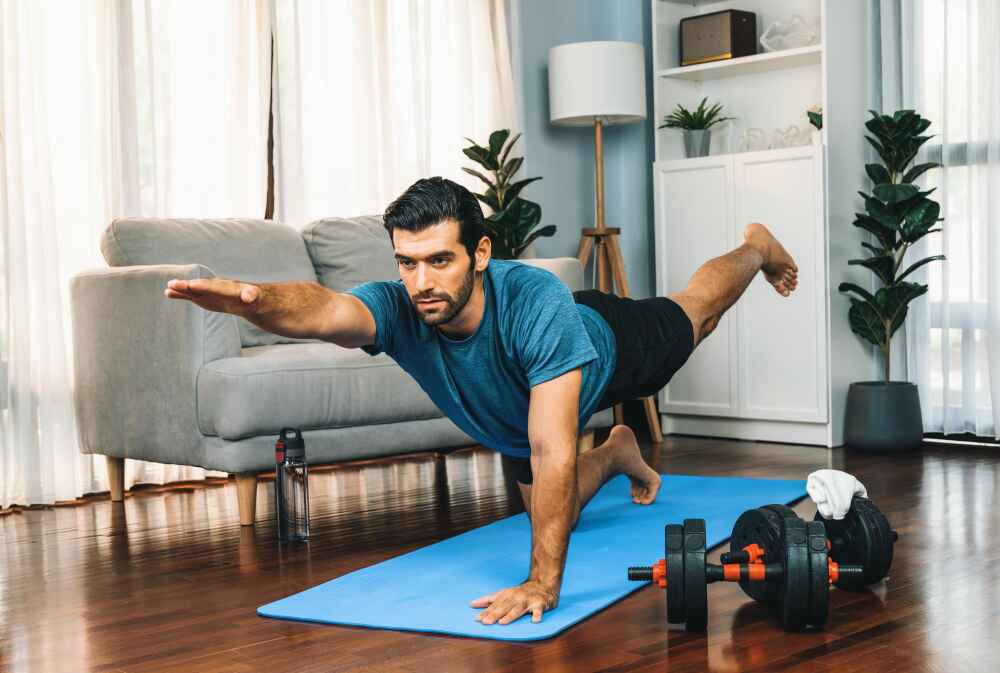
If you want results from a HIIT workout for home, progression should be gradual. The goal is to improve your fitness while keeping good form.

Simple progression plan (4 weeks)

  • Week 1: 1 round (or 2 rounds if you feel comfortable)
  • Week 2: Add 1 extra round OR add 2 extra minutes
  • Week 3: Reduce rest by 5–10 seconds (keep form clean)
  • Week 4: Increase work time (example: 40 sec to 45 sec) or increase intensity slightly

Easy ways to level up

  • Move faster but keep control
  • Add a round instead of adding impact
  • Choose harder variations (incline push-up → floor push-up)
  • Shorten rest only when your breathing recovers faster

Good sign you’re progressing: you finish the workout and recover within a few minutes, not 30 minutes later.
Common Mistakes in Home HIIT (And Quick Fixes)

These are the mistakes that stop people from getting results or lead to aches.

1) Skipping warm-up

Fix: 3 to 6 minutes is enough. Do it every time.

2) Going too hard on Day 1

Fix: Start at 7/10 effort. Build over 2–3 weeks.

3) Poor squat and lunge form

Fix: Slow down. Keep knees tracking over toes, chest up, push through heels.

4) Doing HIIT daily

Fix: Stick to 3–4 HIIT days/week. Add walking or mobility on other days.

5) Holding your breath during core moves

Fix: Breathe out during effort (plank taps, crunches, climbers).

6) Not modifying exercises

Fix: Low-impact options are still effective if you keep intensity high.

FAQs for “HIIT Workout for Home” (SEO Friendly)

  • Is HIIT good for weight loss?

Yes, it can support fat loss because it improves fitness and burns calories efficiently. Best results come with consistency and sensible eating.

  • How long should a home HIIT workout be?

Most people do well with 12 to 20 minutes. If you’re a beginner, even 10 to 12 minutes is a strong start.

  • Can beginners do HIIT at home?

Yes. Use low-impact moves, longer rest, and fewer rounds. Progress slowly.

  • Can I do HIIT every day?

Not recommended for most people. A better plan is 3 to 4 times per week, with rest or light movement in between.

  • Do I need equipment for HIIT at home?

No. Bodyweight exercises are enough. A mat and a timer are helpful but optional.

  • What if I have knee pain?

Choose low-impact swaps (fast march, side steps, walk-back burpees) and keep movements controlled. Avoid jumping until pain-free.


Conclusion (HIIT Workout for Home)

A HIIT workout for home is one of the easiest ways to stay consistent when life is busy. You don’t need a gym, you don’t need fancy equipment, and you don’t need long sessions. If you can commit to 20 minutes, 3 to 4 times a week, you’ll build stamina, improve strength, and feel more active in day-to-day life.

The key is to start at the right level, keep your form clean, and progress slowly. Even low-impact HIIT works well when you put in honest effort during the work intervals.

Key Takeaways (Quick Summary)

  • Warm up for 3 to 6 minutes before every HIIT session
  • Start with a beginner format and increase intensity over time
  • A strong target is 3 to 4 HIIT sessions per week
  • Use low-impact swaps if you have knee or joint discomfort
  • Progress by adding rounds, improving form, or reducing rest gradually


Welcome to the experience of revolutionizing your Gym

Fill the form below to request for 1-on-1 free demo

Start Free Trial